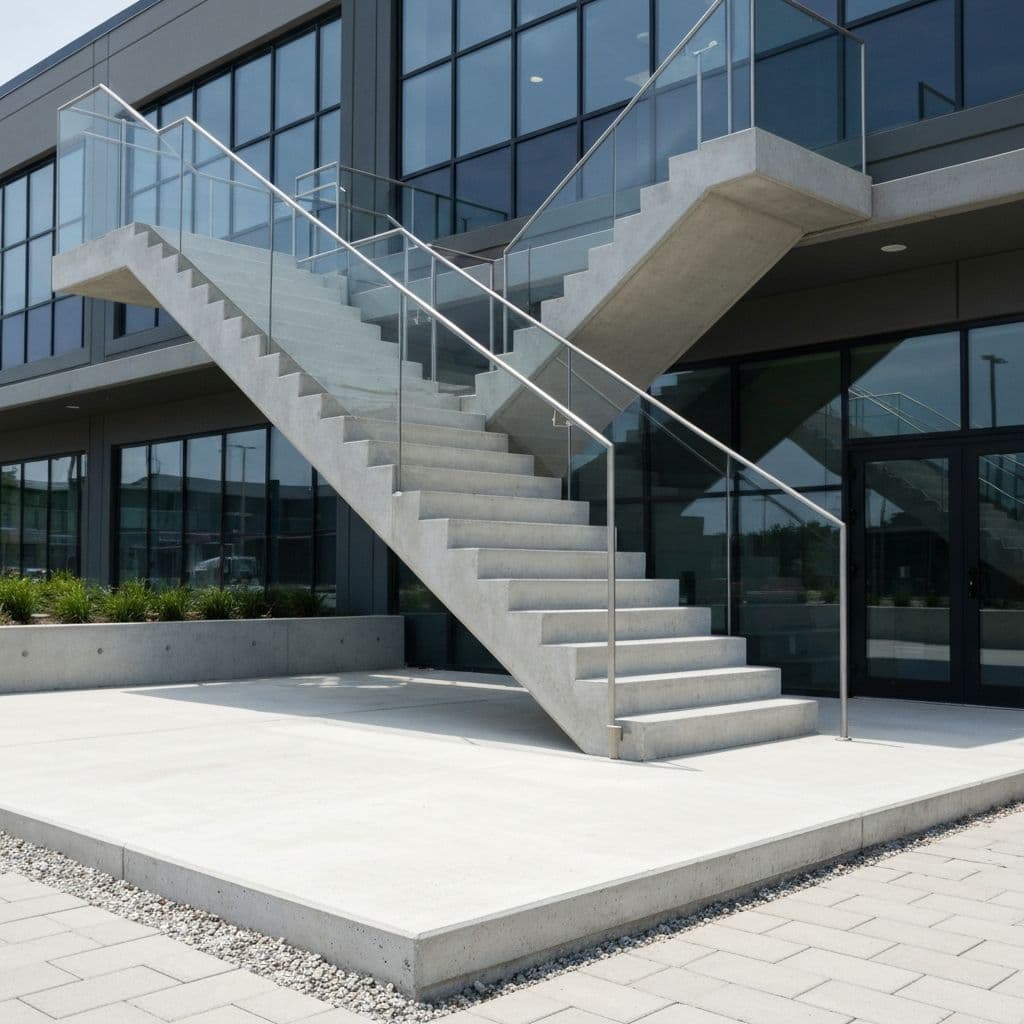
Concrete stairs offer six clear advantages: durability, affordability, design flexibility, easy maintenance, fire resistance, and fast installation. Here is how each one benefits your project.
Concrete stairs offer six advantages that make them a standout choice for homes and commercial buildings alike: they are exceptionally durable, cost-effective over their lifespan, flexible enough to match any design, simple to maintain, fire-resistant, and quick to install when you use precast units. If you are deciding what material to use for a new staircase or a replacement, here is a clear breakdown of each advantage and what it means for your project.
1. Durability That Lasts Decades
A reinforced concrete staircase is built to handle heavy, repeated foot traffic without wearing down. Concrete does not warp like wood or fatigue like metal, and with steel reinforcement inside, it resists cracking under load. This makes it equally suited to a busy commercial lobby and a family home's front steps. Properly built and sealed, concrete stairs routinely last for decades with no structural attention.
2. Lower Cost Over the Life of the Stair
Concrete is one of the more economical structural materials, and the savings continue long after installation. Because concrete stairs don't need refinishing, rot repair, or rust treatment, the ongoing cost of ownership stays low. Precast units push the value further by cutting labor hours on-site. When you compare the full lifespan cost rather than just the day-one price, concrete usually comes out ahead of wood and metal.
3. Design Flexibility for Any Style
Concrete can be cast into nearly any shape, size, or profile, which gives architects and homeowners a wide design range. Treads can be finished smooth for a modern interior or textured for grippy exterior steps, and concrete accepts integral color, staining, and exposed-aggregate finishes. Whether the building calls for a clean contemporary line or a more traditional look, the stair can be made to fit rather than compromise the design.
4. Easy to Clean and Maintain
Maintenance on concrete stairs is minimal. Interior treads need little more than regular sweeping and the occasional wash. Exterior steps can be rinsed or pressure-washed to clear dirt and debris. Unlike wood, there is no varnish to reapply, and unlike carpeted or metal stairs, there are no fibers to wear out or fasteners to retighten. A periodic reseal on exterior concrete is usually the extent of the upkeep.
5. Fire Resistance
Concrete is non-combustible. It won't ignite, and it won't feed or accelerate a fire the way wood stairs can. In a multi-story building, that property is significant: a concrete stair can hold its structural integrity longer in a fire, helping preserve a safe evacuation route. This is one reason concrete stairs are standard in commercial egress design and valued in residential settings near garages, basements, and fireplaces.
6. Fast Installation with Precast Units
One of the biggest practical advantages comes from precast concrete stairs, which arrive at the site already cured and ready to set. There is no formwork to build, no on-site pour, and no waiting days for the concrete to reach strength. Crews position the units and the stair is ready to use almost immediately—a major benefit on tight construction schedules and in occupied buildings where downtime is costly.
Choosing Concrete for Your Next Project
Taken together, these advantages explain why concrete stairs are a go-to choice for residential homes, offices, schools, and public buildings. They combine the strength and fire resistance a building needs with the design range a project wants, all at a cost that makes sense over the long run.
If you are ready to specify durable, custom-made stairs for your project, explore our precast concrete stair treads and request a quote tailored to your design.