Concrete stairs strengthen a building's structural integrity through reinforced load capacity, durability, and stable connections. Here is how they carry load and resist failure over time.
Concrete stairs improve a building's structural integrity by carrying heavy loads through steel-reinforced sections, resisting the wear and environmental damage that weaken other materials, and forming stable connections to the surrounding structure. In a multi-story building, the stairway is both a daily-use element and a critical egress path, so its strength directly affects how safe and sound the structure is. Here is how concrete stairs contribute to that strength and what to consider when specifying them.
What Structural Integrity Means for a Staircase
Structural integrity is a structure's ability to carry its intended loads without failing. For a staircase, that means supporting the dead load of its own weight plus the live load of people and equipment moving across it, day after day, without cracking, deflecting, or pulling away from its supports. A stair that loses integrity becomes a safety hazard exactly where people are most exposed. Integrity is compromised by poor construction, inadequate reinforcement, the wrong material choice, or deferred maintenance—so getting the stair right from the start is essential.
How Concrete Stairs Carry Load
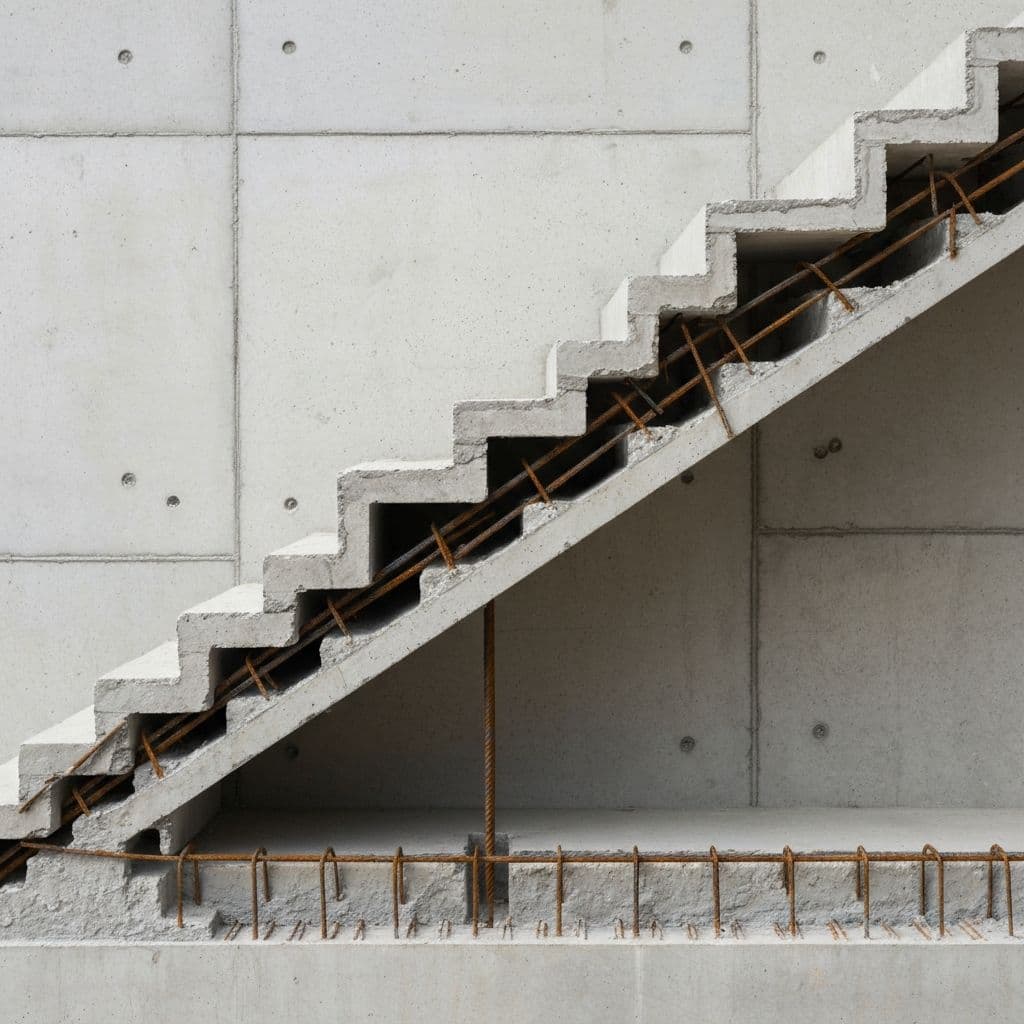
The strength of a concrete stair comes from combining concrete and steel. Concrete is excellent in compression but weak in tension; steel rebar is strong in tension. Embedding rebar in the stringer and treads lets the stair resist both the downward push of compression and the bending forces that occur as load is applied across a span. Engineered to a defined load rating and cast to precise tolerances, a reinforced concrete stair distributes weight predictably down to its supports rather than concentrating stress where cracks could start.
Durability That Preserves Strength Over Time
A stair only maintains its integrity if the material doesn't degrade. Concrete resists the deterioration that erodes wood and metal—it won't rot, won't rust, and won't fatigue under repeated loading. High-quality concrete stairs withstand years of foot traffic and, on exterior runs, resist cracking from extreme temperatures and freeze-thaw cycles when properly sealed. Because the material holds its strength, the stair keeps performing to its original rating instead of weakening as it ages, which is what makes concrete a sound long-term investment.
Stable Connections to the Structure
A staircase is only as strong as its attachment to the building. Concrete stairs form rigid, stable connections to landings, slabs, and foundations, which helps tie the levels of a structure together and resist the movement and vibration that loosen lighter stair systems over time. That rigidity reduces wobble and flex, contributing to a building that feels—and is—solid underfoot.
Why Precast Reinforces Integrity
Precast concrete stairs add a quality-control advantage to all of the above. Manufactured off-site under controlled conditions and strict standards, each unit reaches its full design strength before installation, eliminating the inconsistencies that can occur with a job-site pour exposed to weather. They install quickly, require little maintenance afterward, and deliver the same engineered strength unit after unit—so the integrity you design for is the integrity you get.
Specifying Stairs That Hold Up
The structural performance of a stair depends on right-sizing the reinforcement, choosing a material that resists environmental damage, and ensuring solid connections to the structure. Concrete stairs check all three boxes, which is why they're a default choice for buildings where strength and longevity matter. Working with an experienced manufacturer ensures the units are engineered and built to the loads your project demands.
If you need stairs engineered for strength and built to spec, explore our commercial concrete stair treads and request a quote for your project.