Precast concrete stairs are built to withstand heavy foot traffic, extreme weather, and decades of use. Here is what makes them so durable and why that durability saves money.
Precast concrete stairs are among the most durable stair systems you can install, and the reason comes down to how they are made: steel-reinforced concrete cast and cured under controlled plant conditions resists the cracking, warping, and weather damage that wear out other materials. That durability is not just a quality talking point—it directly lowers the cost of owning the stair over its lifespan. Here is what gives precast concrete its strength and why it holds up where wood and metal don't.
Why Precast Concrete Stairs Are Built to Last
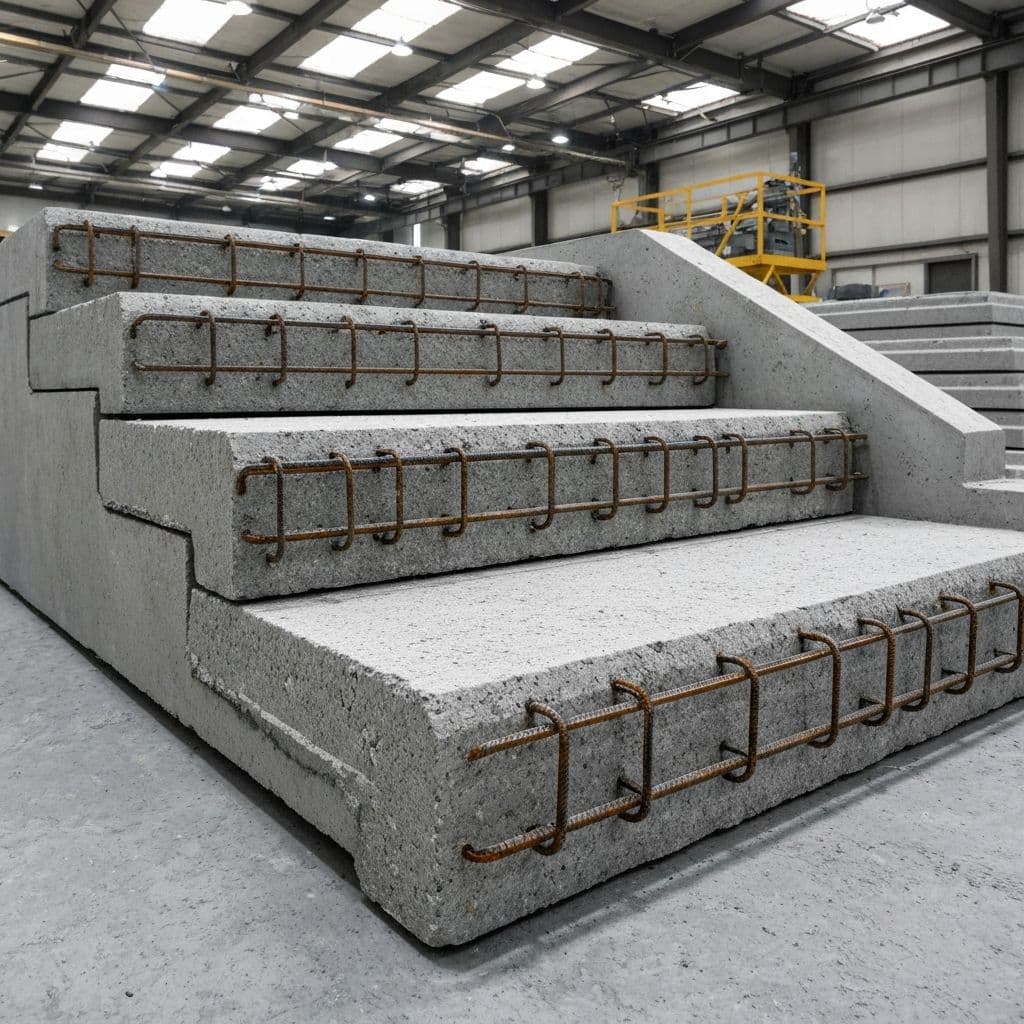
Durability starts with the manufacturing process. Precast units are produced from reinforced concrete in a plant where the mix ratio, consolidation, and curing temperature are all controlled. That controlled cure is what gives precast its uniform density and strength—conditions a job-site pour can't guarantee when it's exposed to wind, heat, or cold. Steel rebar runs through each unit to handle tension and bending loads, so the stair resists the cracking that compromises stairs poured under variable field conditions. The result is a consistent, predictable unit that performs the same on the first day and years later.
Superior Strength Under Load
Precast concrete stairs are engineered to a specific load rating, then reinforced with steel and cast to precise tolerances. That combination gives them the stability to carry heavy, repeated loads without flexing or fatiguing. It's why they're a fit for high-traffic settings—schools, offices, transit stations, and apartment buildings—where the stair is in constant use and failure isn't an option. A precast stair doesn't develop the wobble or wear that erodes confidence in lighter materials.
Weather and Freeze-Thaw Resistance
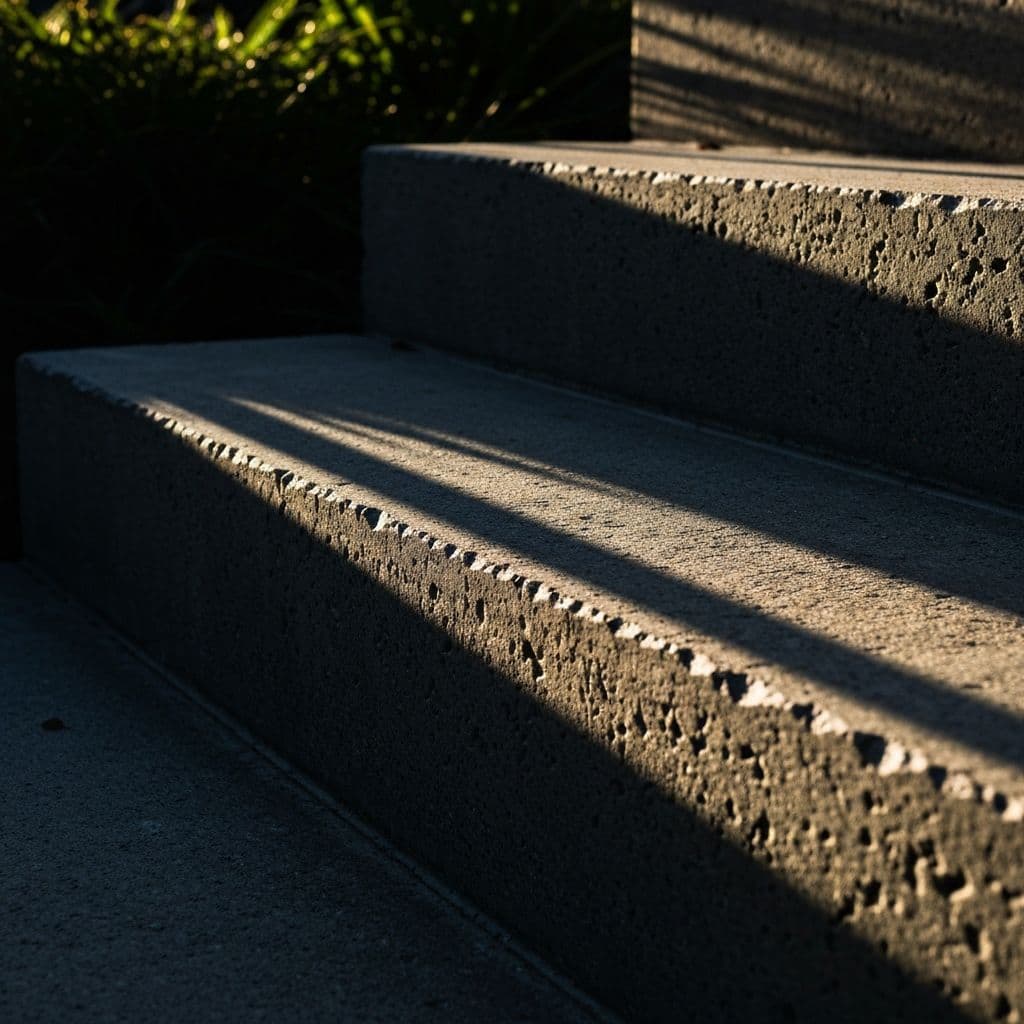
Exterior stairs take a beating from the elements, and this is where precast concrete really separates itself. Dense, plant-cured concrete resists moisture penetration, which is the root cause of most weather damage. In climates that swing below freezing, water that seeps into porous material expands as it freezes and pries the surface apart over repeated freeze-thaw cycles. Quality precast, properly sealed, keeps that water out, so the steps don't spall, flake, or crack through the winter. They handle driving rain, snow, and summer heat without losing their finish or strength.
Longevity That Saves Money
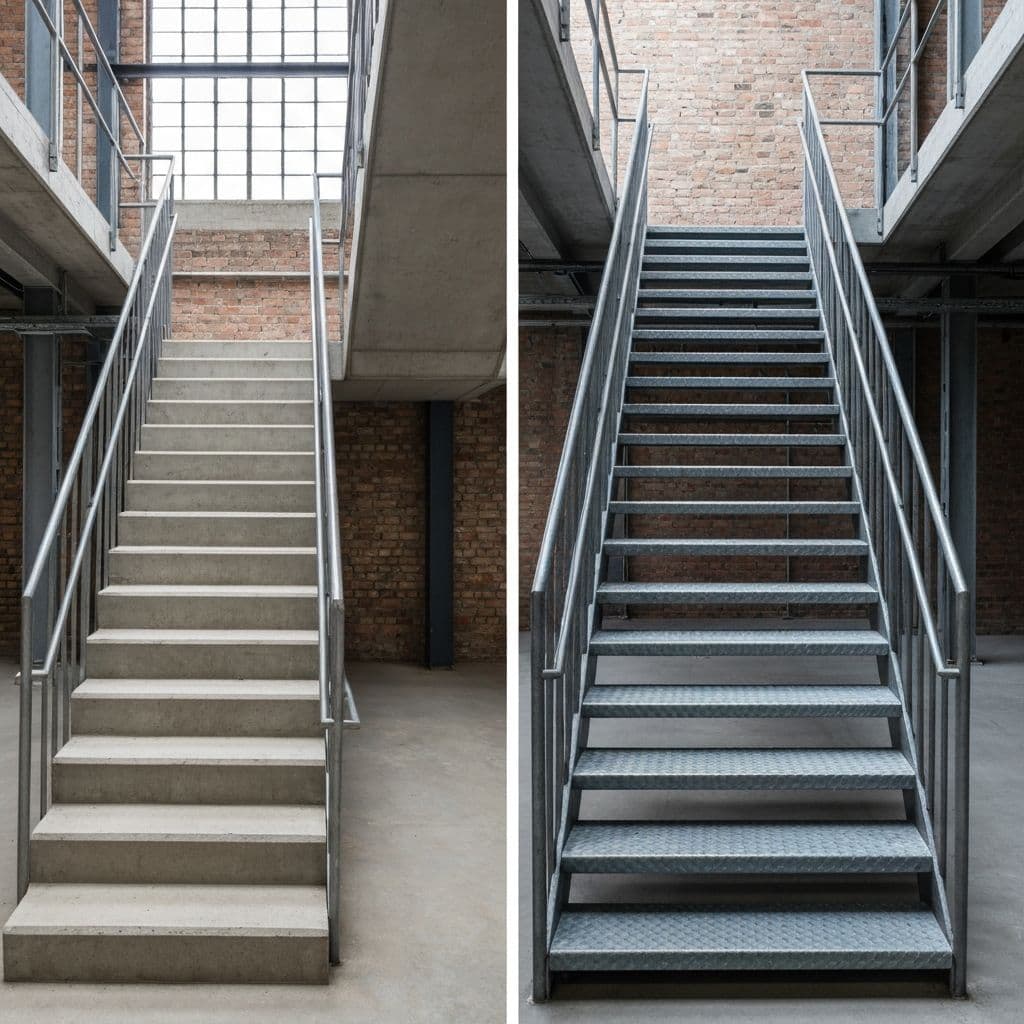
Durability is really a cost story. A stair that lasts decades with minimal upkeep avoids the recurring expenses that pile up with other materials—no refinishing, no rot repair, no rust treatment, no early replacement. The upfront investment in precast is recovered through years of low maintenance and a service life that often outlasts the building's other components. For owners weighing options, the cheapest stair to install is rarely the cheapest stair to own, and precast consistently wins on lifetime cost.
Consistent Quality, Unit After Unit
Because precast stairs are made off-site under repeatable conditions, every unit matches the last in strength, dimension, and finish. On-site pours vary with the crew, the day, and the weather; precast removes that variability. For a project with multiple flights or a phased build, that consistency means the stairs installed in year one look and perform identically to the ones installed later.
Built for Residential and Commercial Projects Alike
The same durability that suits a high-traffic commercial stairwell makes precast a smart residential choice, where front steps and interior staircases benefit from a surface that won't wear, rot, or rust. Whatever the setting, the priority is the same: a stair you install once and rely on for the long haul.
If you want stairs engineered for strength and built to last, explore our precast concrete stair treads and request a quote for your project.