The most common office stair types are straight, L-shaped, U-shaped, and curved stairs. Here is how each one works, where it fits best, and how to choose the right style for your building.
The four office stair types you'll encounter most often are straight, L-shaped, U-shaped, and curved stairs. Each has a different footprint, cost, and visual impact, so the right choice depends on how much floor space you have, how the stair fits into the layout, and the impression you want it to make. Below is a practical guide to each type and the factors that should drive your decision.
Straight Stairs
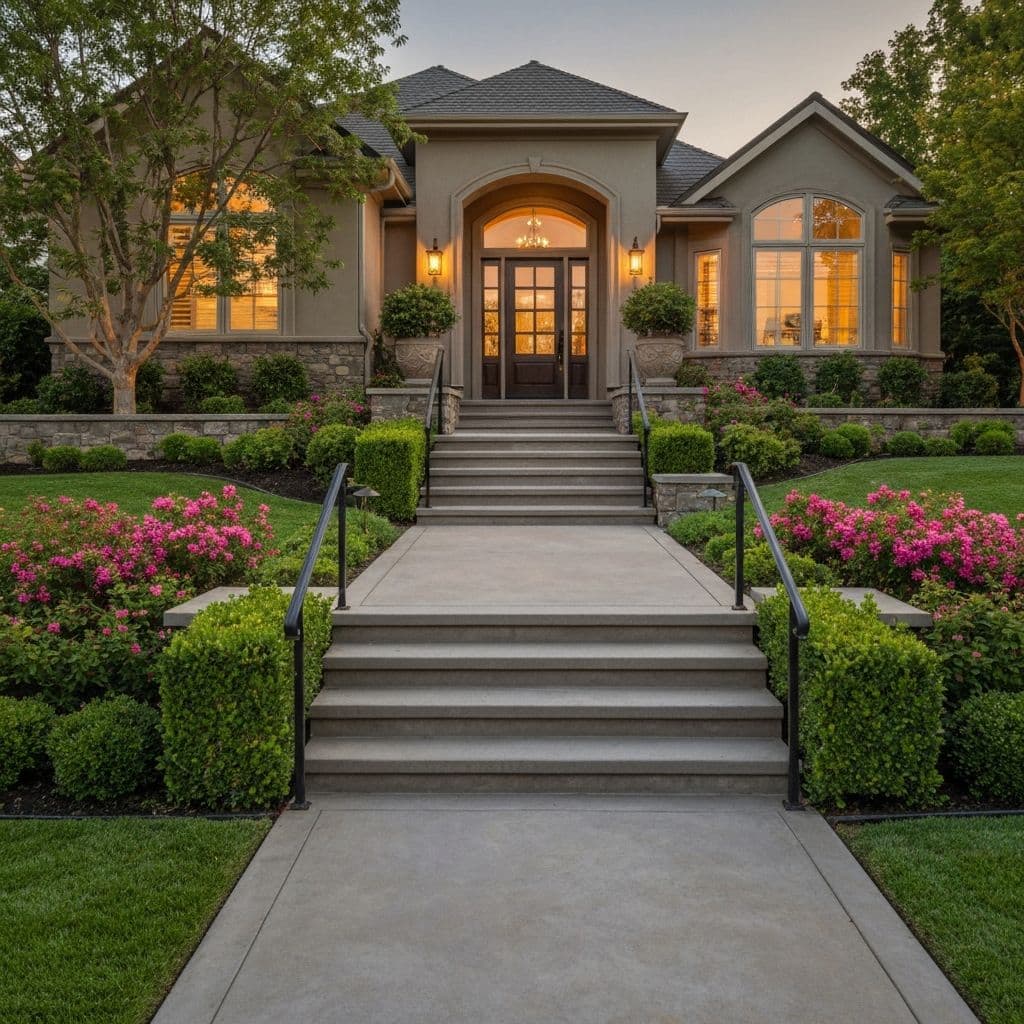
Straight stairs run in a single, uninterrupted line from one floor to the next. They are the most common type in both offices and homes because they're the simplest and most economical to build—no turns means no complex framing or angled cuts. They're also the easiest to add handrails to and the most predictable to walk. The trade-off is footprint: a straight run needs a long, linear space, and tall floor-to-floor heights may require an intermediate landing, which extends the run further. For offices with the linear space to spare, straight stairs are efficient and budget-friendly.
L-Shaped Stairs
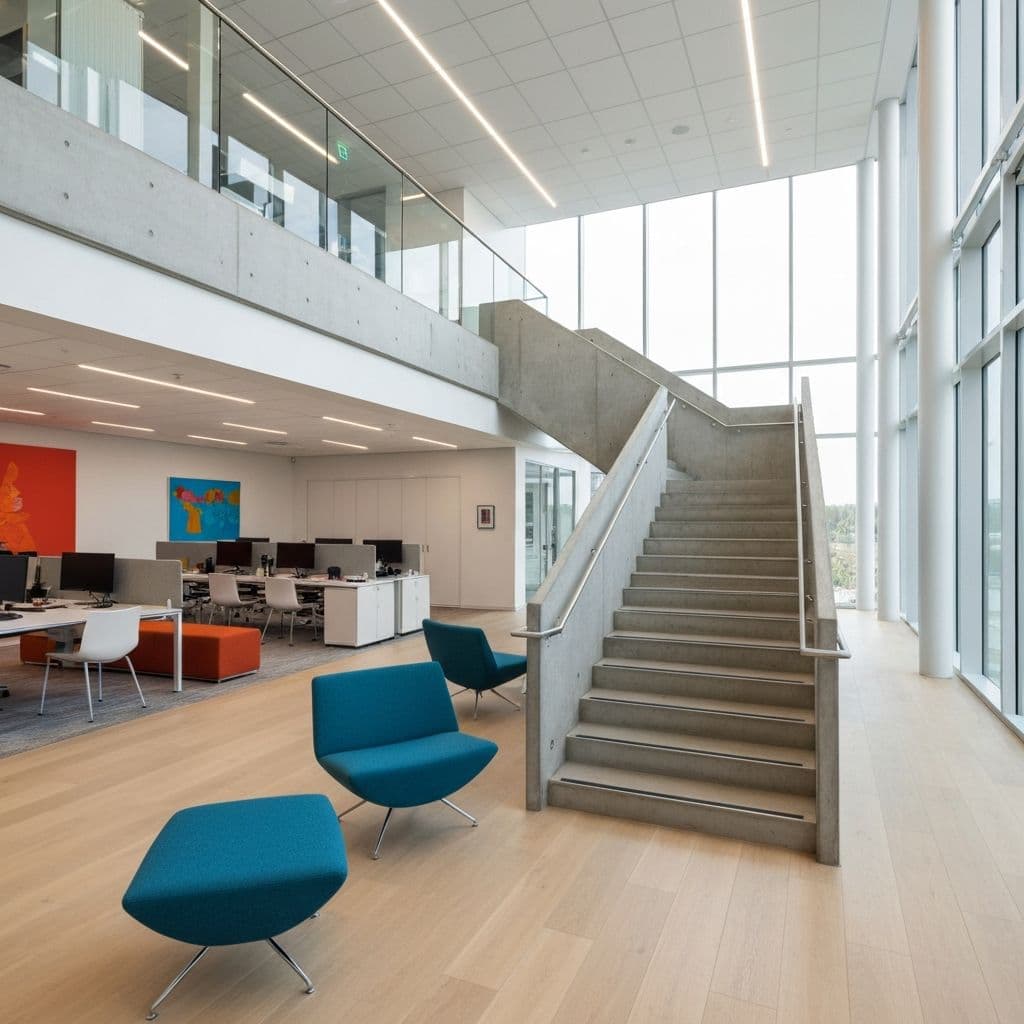
L-shaped stairs add a 90-degree turn with a landing partway up. That turn lets the stair fit into a corner or against two walls, which makes better use of space in offices where a long straight run won't fit. The mid-flight landing is a practical safety feature too—it gives people a place to pause and shortens the distance of any single fall. L-shaped stairs add visual interest without consuming much more floor area than the corner they occupy, making them a flexible choice for entryways and tighter footprints.
U-Shaped Stairs
U-shaped stairs consist of two parallel flights connected by a landing that reverses the direction of travel 180 degrees. This switchback design is space-efficient in the vertical dimension, which is why it's so common in multi-story office buildings and stairwells—it stacks neatly within a compact core. The central landing breaks up the climb and provides a natural rest point. U-shaped stairs work especially well where the stairwell must serve several floors within a fixed structural footprint.
Curved and Spiral Stairs
Curved stairs sweep along a radius and are typically reserved for lobbies and feature areas where the stair is meant to make a statement. They create an elegant focal point and signal a high-end space, but they're more complex and costly to fabricate and require more room than a straight or L-shaped run. Spiral stairs, by contrast, wind tightly around a central post and have the smallest footprint of any type—useful for secondary access or tight mezzanines, though less comfortable for heavy two-way traffic. Reserve curved stairs for high-visibility entrances and spirals for space-constrained secondary routes.
How to Choose the Right Office Stair
Three factors should drive the decision:
- Available space and layout. Straight stairs need a long linear run; L- and U-shaped stairs fit corners and compact cores; spiral stairs fit the tightest spaces; curved stairs need the most room. Match the type to the floor plan first.
- Safety and traffic. For high-traffic offices, prioritize generous tread depth, consistent riser height, code-compliant width and handrails, and landings that break up long flights. Slip-resistant surfaces matter in busy corridors.
- Cost and design intent. Straight and L-shaped stairs are the most economical; U-shaped stairs balance efficiency and cost; curved stairs cost the most but deliver the strongest design impact. Decide whether the stair is purely functional or a centerpiece.
Whatever style fits your layout, concrete construction gives an office stair the durability and fire resistance a commercial building needs, plus the finish options to match your interior. If you're planning an office staircase, explore our commercial concrete stair treads and request a quote for your project.