Precast concrete stair treads beat poured-in-place concrete on quality control, installation speed, year-round scheduling, and waste. Here is how the two methods compare point by point.
If you are choosing between precast and poured-in-place concrete stairs, precast wins on most of the factors that matter to a project: tighter quality control, faster installation, year-round scheduling, and less on-site waste. Poured-in-place still has a role in certain monolithic structures, but for stair treads specifically, precast units that arrive cured and ready to set almost always save time and money. Below is a direct comparison of the two methods across the points that affect cost, schedule, and finished quality.
How the Two Methods Differ
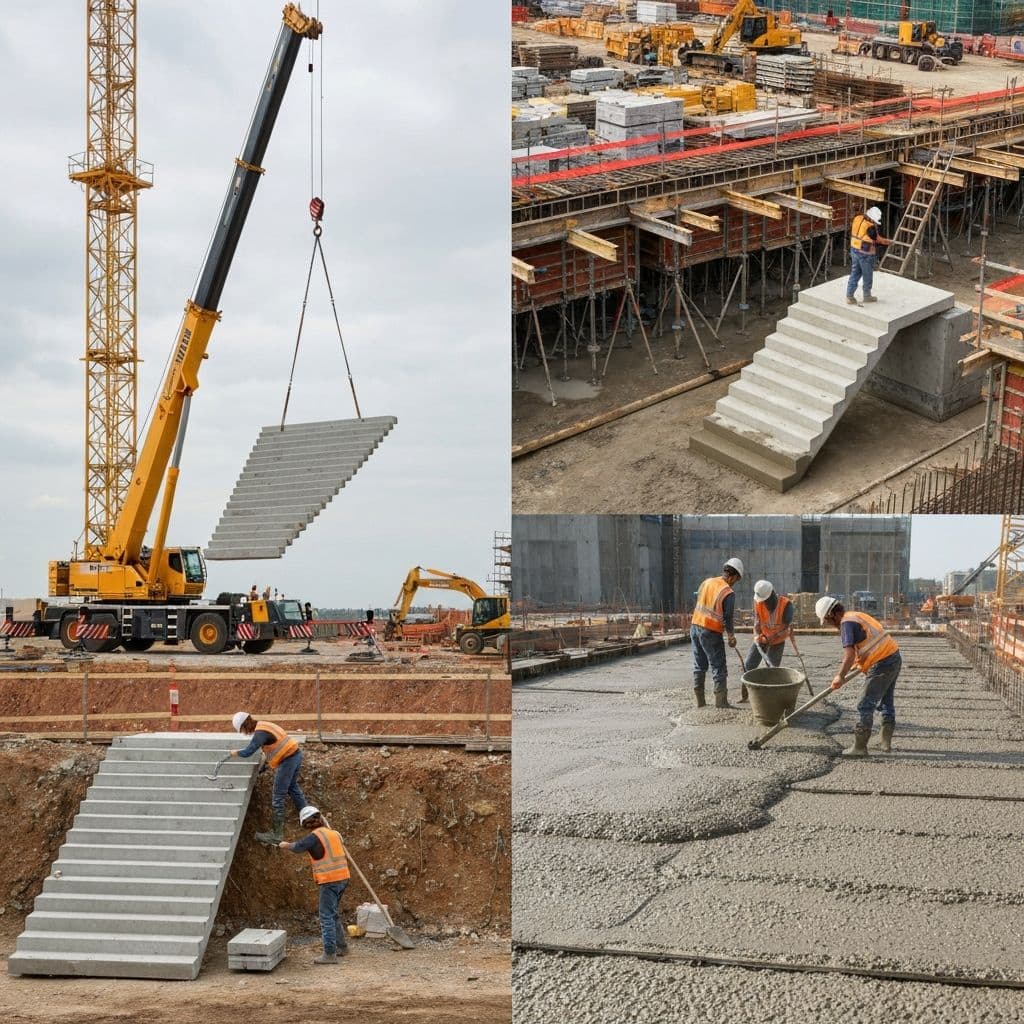
Poured-in-place concrete stairs are formed and cast on the job site. Crews build temporary formwork, place rebar, pour the concrete, wait for it to cure, then strip the forms and finish the surface. Every one of those steps happens in the field, exposed to weather and site conditions.
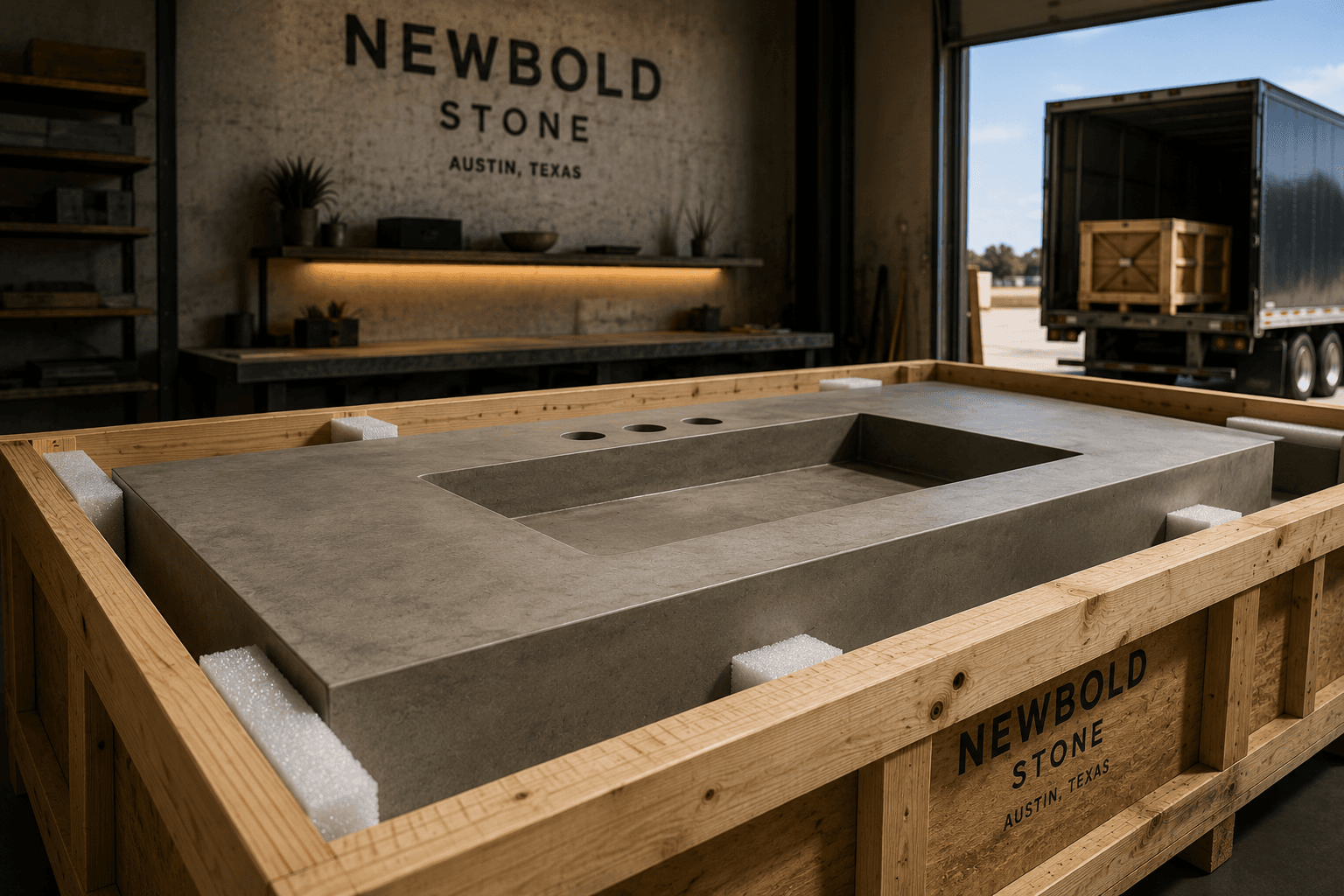
Precast concrete stair treads are manufactured in a plant, cured under controlled conditions, and delivered ready to install. The unit you receive has already reached its design strength before it ever reaches the site. That single difference drives most of the advantages below.
Quality Control and Consistency
Concrete cast in a controlled plant is mixed to an exact ratio, vibrated to remove voids, and cured at regulated temperature and humidity. The result is uniform strength, color, and finish across every unit. Poured-in-place stairs depend on field conditions—ambient temperature, the crew pouring that day, and how evenly the concrete is consolidated—so quality can vary from one flight to the next. For projects where appearance and load rating need to be repeatable, precast removes the guesswork.
Installation Speed and Site Disruption
Forming, pouring, and finishing stairs on-site ties up a work area for days while the concrete cures. Precast treads skip that entirely. They are lifted into position and set, often in a fraction of the time, with little disruption to surrounding trades or, in a remodel, to the people living in the home. On commercial schedules where the stair is on the critical path, that time savings can move a completion date forward by a week or more.
Year-Round Scheduling and Weather
Poured-in-place concrete is sensitive to temperature. Pour in freezing weather and the mix can fail to cure properly; pour in extreme heat and it can cure too fast and crack. Because precast is produced indoors, manufacturing continues regardless of the weather outside, and installation can happen in conditions that would make an on-site pour risky. This keeps winter and shoulder-season projects on track.
Cost and Material Waste
Precast production generates less waste because molds are reused and quantities are calculated precisely, so there is far less leftover concrete and form material headed to a landfill. Fewer labor hours on-site, no formwork to build and remove for each flight, and no cure-time downtime all translate into lower installed cost on most stair projects. Poured-in-place can still be economical for fully monolithic structures, but for standalone stairs the precast approach is usually leaner.
When Poured-in-Place Still Makes Sense
Poured-in-place has its place. It can be the right call when stairs must be cast monolithically with a surrounding slab or foundation, or when an unusual geometry can't be molded efficiently. The decision comes down to the structure: if the stair is an integral, continuous pour with the building's concrete frame, in-place may simplify the connection.
For the majority of residential and commercial stair projects, though, precast delivers better consistency, a faster schedule, and a cleaner site. If you want stairs engineered to your dimensions and delivered ready to install, take a look at our precast concrete stair treads and request a quote for your project.